Category

Road Traffic

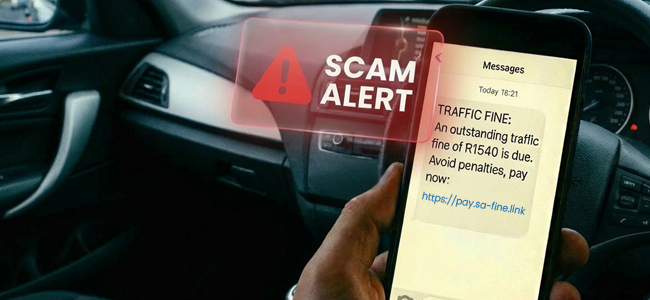
The AARTO National Rollout has Been Delayed – But Beware of  Scams!

By | General Interest, Road Traffic

“South African drivers, beware! Scammers are issuing fake traffic fines to catch you off guard! Always use AARTO approved collecting agents for your payments.” (Road Traffic Infringement Agency)

The national rollout of AARTO has again been postponed, this time to July 2026. Speculation is that we now won’t see the demerit system implemented before the middle of 2027, but both dates remain provisional until gazetted.

None of this should stop us from sharing with our families, friends, colleagues and staff this warning: Scammers don’t care about the delayed rollout date, they’re too busy stealing from harried motorists.

How to avoid being scammed

Beware of these common scams:

  • Phishing emails, SMSs and WhatsApp messages. They can look exactly like official communications from genuine organisations – your local traffic department perhaps, or the National Traffic Information System (Natis).
  • Links to fake payment portals and official websites, cloned to look like the real thing.
  • Phone calls from helpful “officials”, warning you of “overdue” fines and kindly offering to guide you through a quick and easy payment process to avoid all the horrendous consequences of failing to pay.

These “ghost fine” frauds all take advantage of the confusion swirling around everything AARTO, and use a blend of threats (“If you don’t pay you face arrest and suspension of your driver’s licence”), incentives (“Pay within 5 days to get a 50% discount) and deception to con you into rushing payment.

Use only official, legitimate payment channels. If you aren’t sure, check with your local municipality (or ask us to check for you).

Disclaimer: The information provided herein should not be used or relied on as professional advice. No liability can be accepted for any errors or omissions nor for any loss or damage arising from reliance upon any information herein. Always contact us for specific and detailed advice.

© LawDotNews

As 1 December Looms, Here’s What AARTO Means for Motorists and Employers

By | Employment and Labour Law, General Interest, Road Traffic

“Forewarned is forearmed.” (Wise old proverb)

Government keeps assuring us that the long-delayed AARTO (Administrative Adjudication of Road Traffic Offences) system will finally begin its full national rollout on 1 December 2025.

Is this another false start or the real thing this time?

There have been so many false starts to AARTO over the last fifteen years that many of us will no doubt take the attitude “I’ll believe it when I see it” … Particularly with all the speculation that the implementation could be delayed, varied or even blocked again by legal and other challenges.

But let’s not be caught unawares here – this time, the first phase really could be shooting out of the starting blocks on time, so it seems a good idea to start prepping for the changes. Particularly now that the annual holiday season, with its surge in year-end travel, speed trapping and roadblocks, is almost upon us.

In a nutshell, the way traffic fines work is about to change for millions of drivers, including private motorists, fleet operators, delivery drivers, taxi operators, owners etc.

Here’s what you need to know on a practical level.

Firstly, driver demerits are still nine months away

Sensational, click bait headlines and fake news reports notwithstanding, the “driver demerit points” system, with its licence suspensions and cancellations for repeat offenders, is only scheduled to kick in on 1 September 2026.

So what will actually change on 1 December?

If your vehicle is registered in, or if you drive in, any of the 69 major municipalities and metros countrywide scheduled for commencement on 1 December 2025, you’ll be subject to these new rules from day one, with the other 144 areas set to commence on 1 April 2026:

  • Fines will become administrative, not criminal: Traffic infringements such as speeding, traffic light, licence, parking offences and so on will no longer be handled in criminal courts. Instead, the RTIA (Road Traffic Infringement Agency) will run everything as an administrative process.
  • Electronic notices: Infringement notices, courtesy letters and enforcement orders can now be sent by email or SMS (even by fax if you still list a fax number) as well as by post or personal service. Not receiving notices won’t be a defence – legal service will be deemed to have been made whether you receive/open them or not. The onus is on you to make sure you get them by updating all your contact details with your licensing authority now – and by configuring your spam and junk filters to let them through.
  • Discounts and deadlines: A 50% discount will be your reward for paying within 32 days of receiving an Infringement Notice. Miss that window and you lose the discount. You may then get a Courtesy Letter allowing you another 32 days to pay the full fine plus a fee. If you still don’t pay, an Enforcement Order is issued.
  • Enforcement orders will block licence and permit renewals: Unpaid fines that reach the “enforcement order” stage are recorded on the National Contraventions Register. If your name appears on the register, you are automatically blocked from registering a vehicle and from renewing your vehicle licence disc or driver’s licence/professional driving permit.
  • If you aren’t the driver: You must nominate the actual driver within 32 days to prevent the fine being attached to you. Keep a copy of all drivers’ driving licences so you have a record of the infringer’s full names and I.D. number.
  • Businesses in particular should be able to identify the drivers of their vehicles at all times so that fines can be allocated correctly. Also, review all your staff training processes, vehicle policies and disciplinary procedures accordingly.
  • Scammers are reportedly already issuing fake notices so be sure to pay on authorised payment portals only.
  • Know your rights but act quickly: You can still make representations or appeal against fines you disagree with, but strict deadlines apply.
Johannesburg and Tshwane motorists

Note that although Johannesburg and Tshwane motorists have already lived with AARTO’s pilot fine system for years, from 1 December 2025 they will move onto the amended national AARTO framework and can expect stricter electronic service, updated fine tariffs, stronger enforcement order blocks on licence renewals, and new proxy nomination duties.

Bottom line: if you need our help with anything, please get in touch immediately!

Disclaimer: The information provided herein should not be used or relied on as professional advice. No liability can be accepted for any errors or omissions nor for any loss or damage arising from reliance upon any information herein. Always contact us for specific and detailed advice.

© LawDotNews

Report Your Traffic Accident with an Online Reporting Service

By | General Interest, Road Traffic

Traffic accidents, your fault or not, are traumatic affairs. Even minor dings come with their hassles – panel beaters, tow trucks, shock and recriminations, reams of paperwork, having to get a Crash Report Number for the insurers…

That last bit has always been a major added stress factor, requiring a trip to the local police station (unlikely to be a happy experience) and yet more paperwork. 

No longer – life just got a little bit easier with the new online reporting service from NaTIS (the National Traffic Information System) on its website here. The submission of the report is legally binding and only applies to “minor damage crashes”, not in cases of injury or death. Note the time limit – “All crashes must be reported within 24 hours or the next working day. (Non-Working days Saturday, Sunday and Public Holidays).”

Get your lawyer’s help urgently if it’s anything but a minor accident!

Disclaimer: The information provided herein should not be used or relied on as professional advice. No liability can be accepted for any errors or omissions nor for any loss or damage arising from reliance upon any information herein. Always contact your professional adviser for specific and detailed advice.

© LawDotNews

Losing Your Licence with AARTO Demerits: More Danger than You Thought, and The Wheels are Turning

By | Employment and Labour Law, General Interest, Road Traffic

“The one thing that unites all human beings, regardless of age, gender, religion, economic status, or ethnic background, is that, deep down inside, we all believe that we are above-average drivers” (humourist Dave Barry) 

AARTO (the Administrative Adjudication of Road Traffic Offences Act) has been partially in force for years, but its demerit provisions have been on ice for so long now that many of us have lost sight of just how seriously it will impact both ourselves as individuals, and our businesses. 

Every individual and every business is at risk

Law-abiding motorists will no doubt welcome the crackdown on serial traffic offenders, but we also need to manage the risks.  

Every motorist, every vehicle owner, every professional driver and every transport operator will be at serious risk of losing their licences/permits/operator cards.  Even businesses outside the transport sector will need to manage this – what happens if your sales people are grounded or your office staff can’t drive to work?

The wheels are turning fast now, with amendments to the Act at long last passed by Parliament, and set to come into law when signed by the President. 

Will it be delayed yet again?

The demerit proposal has been bouncing around for a decade, with several false starts and there is talk of court challenges, plus the commencement date may or may not be delayed.

But at long last the wheels are definitely turning, and turning fast. 

Be prepared! 

Unlucky 13 – easier to reach than you thought

The demerit system is complicated, but in a nutshell you will in addition to paying a fine incur demerit points for a whole range of offences. 

And anyone with 13 or more demerits will have their driver’s licence/professional driving permit/operator card automatically suspended (3 months’ suspension for every point over 12).  And 3 suspensions will result in full cancellation.  

Don’t think that 13 demerits will necessarily take the average driver a long time to accumulate. Consider the demerit points applicable to some sample offences (there are many thousands of them – the table below gives just a few examples).

Sample offences and demerit points
Reducing demerit points, and discounts on fines 

You are also rewarded for obeying the law –
Any demerit points you have picked up are reduced by one point per 3 month period you remain offence-free. 

Early payment of fines will earn you a 50% discount. Set up a payment control system so you don’t miss payment deadlines.

Businesses and employers – manage your risks

Think now about how you will manage the risk of your employees (especially those employed as drivers) repeatedly offending –
How will you monitor your drivers’ demerit points?  Although for many offences both driver and operator will incur demerits, some driver offences will apply to the driver only.  

Are your employment contracts correctly structured to ensure you have access to your employees’ demerit points’ status? And to deal with the consequences if they have their licences suspended or cancelled? 

Check your insurance policies – must you disclose any changes in your employees’ demerit status?  Are you at risk of losing cover? 

Disclaimer: The information provided herein should not be used or relied on as professional advice. No liability can be accepted for any errors or omissions nor for any loss or damage arising from reliance upon any information herein. Always contact your professional adviser for specific and detailed advice.

© LawDotNews

Traffic Fines and Admissions of Guilt – Will They Earn You a Criminal Record?

By | Criminal Law / Crime, General Interest, Road Traffic

“We must not make a scarecrow of the law” (Shakespeare)

A criminal record, even for a minor offence from decades back, comes with very serious and lifetime consequences. It will hang around forever, just waiting to ambush you when you apply for a job, or a travel visa, or a firearm licence. 

So acquiring a record inadvertently is the stuff of nightmares, and the question is whether you can land yourself in that position by paying an admission of guilt fine? The reality is that we are beset by so many laws and regulations covering every aspect of our lives that most of us have paid admission of guilt fines at one time or another. Usually it’s just to avoid having to defend ourselves in the unpredictability and delay of an over-burdened court system. Sometimes it’s the more serious matter of avoiding a stay in a police cell.

A remedy, but it’s not ideal 

The remedy, once you do have a record, is to apply for “expungement” of the record to remove it from the CRC (SAPS’ Criminal Record Centre)’s database. Expungement is however only available to you after 10 years and for certain “minor offences” – plus your application will take a long time to process (“20 – 28 weeks” per SAPS). Note that some specified minor convictions fall away automatically after 10 years – ask for specific advice.

All in all, prevention is very definitely better than cure.

When are you at risk?
  • You will acquire a criminal record if you are arrested, if the police open a docket and take fingerprints, and if you are thereafter convicted of a crime.
  • Does that apply to admission of guilt fines? Firstly, with traffic offences find out what section of the Criminal Procedure Act (CPA) is involved. Minor offences – speeding, licence offences, illegal parking and the like are normally “Section 341/Schedule 3” offences, where there is no actual prosecution and therefore no criminal record to end up in the CRC.
  • Other offences however will likely be dealt with as “Section 57/57A” offences. An admission of guilt in those cases lands you with a “deemed” conviction and sentence, and until recently, that deemed conviction and sentence could well have ended up in the CRC database. In practice you would probably still have been in the clear if you weren’t actually arrested and fingerprinted, but several years ago there was talk of convictions being captured with just a name and ID number. If you want to be sure, apply for a clearance certificate – see “Applying for a Police Clearance Certificate (PCC)” on the SAPS website.
  • A “Section 56 Written Notice to Appear in Court” may also give you the option of paying an admission of guilt fine to avoid appearance in court – in which event section 57 would apply as above.
  • The point though is that a recent High Court decision means that any admission of guilt fine – even a section 57/57A one and even after an arrest and fingerprinting – should not lumber you with a “permanent conviction”. 

In other words, the new position is that while a court-imposed conviction and sentence will end up in the CRC, an admission of guilt fine should not. 

Let’s illustrate with a look at the case of the roadside grass seller…

A grass seller’s R500 admission of guilt fine comes back to haunt him
  • In 2010 a roadside seller of instant grass quarreled with another grass seller about use of a particular spot on the road. The other seller laid assault charges against him, alleging he slapped her twice and pushed her.
  • Arrested, detained and fingerprinted, the accused paid a R500 admission of guilt fine when given the option to do so. Per standard procedure a magistrate then “examined” the documents and the accused’s “deemed” assault conviction and sentence were entered firstly into the court’s record books and then into the CRC database.
  • The accused learned of his criminal record for the first time when in 2018 he applied to become an Uber driver (a police clearance certificate being an Uber requirement).
  • He turned to the High Court to set aside his conviction and sentence on the basis that he thought signing the admission of guilt was his only way of obtaining release from custody and that his rights had not been explained to him. Effectively he denied the assault, and took the chance that the State might still decide to pursue the prosecution in court.
  • The Court set aside our grass seller’s conviction and sentence, characterising this type of admission of guilt as “not a verdict” but rather “essentially an agreement between the State and the accused” intended only for “trivial offences”, and involving no consideration as to “whether the accused was in fact and in law guilty of the offence”. 
  • The Court: “A conviction and sentence following an entry into the admission of guilt record book by the clerk of the criminal court in the magistrates’ court is not a conviction whose record is permanent” nor “to be entered in the Criminal Record System”.
The bottom line

The Court found that this accused had been pressured into admitting guilt and ordered that the Minister of Police be served with a copy of its order with a view to taking advice from the Commissioner of Police in “devising policy to address the criticism that the SAPS use arrest and detention to force vulnerable members of society who fear being locked up, to admit guilt on petty crimes using arrest and the threat of continued detention.”

But even once such a new policy emerges, be careful here and have your lawyer advise you in the slightest doubt.

Disclaimer: The information provided herein should not be used or relied on as professional advice. No liability can be accepted for any errors or omissions nor for any loss or damage arising from reliance upon any information herein. Always contact your professional adviser for specific and detailed advice.

© LawDotNews