Category

Property

If the Municipality Rejects Your Building Plans, Consider PAJA

By | Constitutional Law, Property

“The Constitution guarantees that administrative action will be reasonable, lawful and procedurally fair. It also makes sure that you have the right to request reasons for administrative action that negatively affects you.” (Department of Justice and Constitutional Development)

Bureaucratic decisions can and do have far-reaching consequences for us, both financially and in our personal lives. It’s good to know therefore that whenever your rights are affected by any such decision, you have access to the protections set out in PAJA (the Promotion of Administrative Justice Act).

In a nutshell, PAJA provides that “administrative decisions” by government departments, parastatals and the like must be fair, lawful and reasonable. Decision makers must follow fair procedures, allow you to have your say before deciding, and give you written reasons for their decisions when asked.

If a decision goes against you, your first step should be to use any internal appeal procedures. Ultimately you can go to court, although often a lawyer’s letter or two will solve the problem without the need for litigation.

A recent High Court decision illustrates one way in which PAJA can help you if all else fails –

A service station’s building plans rejected
  • A service station submitted to its local authority building plans for a proposed refurbishment.
  • After a series of meetings with the municipality and alterations to the plans as various issues were raised and resolved, the service station owners thought they were home and dry. But in the end the plans were not accepted on the basis that the application was for an extension of the service station which could not be approved in terms of the local Town Planning Scheme.
  • The High Court however found that factually there was no “extension” involved and that the municipality had therefore made an “error in law”.
  • That opened the door for the Court to review the municipality’s decision, which it duly set aside. In referring the decision back to the municipality for reconsideration, the Court directed it to make a decision within 21 days, and without regarding the proposed refurbishment as being an extension of the building.

A final thought – strict time limits apply with PAJA, so if a decision goes against you seek professional help without delay!

Disclaimer: The information provided herein should not be used or relied on as professional advice. No liability can be accepted for any errors or omissions nor for any loss or damage arising from reliance upon any information herein. Always contact your professional adviser for specific and detailed advice.

© LawDotNews

Building in Security Estates: The ‘Persuasive Sting’ of Penalty Levies

By | Property
“… had the respondent imposed more moderate penalties, it would likely not have had the desired effect, or put differently, the same persuasive sting for individuals of substantial means.” (Extract from judgment below)
Buying “plot and plan” in a residential complex allows you the freedom to build your own dream house in a secure environment, quite apart from providing what is likely to be sound long-term investment. Just make sure that you will actually be ready to build within the time frame required by the HOA (homeowners’ association). If you don’t, you risk having to transfer the plot back to the developer (a costly exercise), or you could be lumbered with penalty levies many times higher than normal levies.
You can ask a court to reduce the penalty, but…
Our law gives us general protection from excessive “out of proportion” penalties by means of the Conventional Penalties Act, which in the section headed “Reduction of excessive penalty” provides that – “If upon the hearing of a claim for a penalty, it appears to the court that such penalty is out of proportion to the prejudice suffered by the creditor by reason of the act or omission in respect of which the penalty was stipulated, the court may reduce the penalty to such extent as it may consider equitable in the circumstances: Provided that in determining the extent of such prejudice the court shall take into consideration not only the creditor’s proprietary interest, but every other rightful interest which may be affected by the act or omission in question.” However, as a recent High Court decision illustrates, you will have your work cut out for you if you want the court to exercise that discretion in regard to penalty levies.
The ‘persuasive sting’ of 5x normal penalties
  • The HOA of a “luxury/ultra-luxury” residential estate required in its constitution that –
    • Each owner must start construction within one year of transfer,
    • Should construction not commence timeously the developer had the option to require re-transfer of the erf to it,
    • If the developer did not exercise this option, the HOA could “impose whatever penalties it deems appropriate in its sole discretion” on the owner.
  • When several erf owners failed to build within the one-year deadline, the HOA passed resolutions imposing penalty levies on them until they started construction.
  • These levies started off at 2x the normal levies, and over an eight-year period were increased in stages to 5x the normal.
  • The HOA sued the defaulting owners in the Regional Court to recover these levies, winning both in that Court and on appeal to the High Court.
  • It was, held the High Court, up to the owners challenging the amount of the penalty to prove –
    • What prejudice the HOA suffered,
    • That the penalty was disproportionate to that prejudice, and
    • The extent to which the penalty should be reduced.
  • In addition to the actual monetary prejudice (damages) suffered by the HOA, it was said the Court necessary to consider the HOA’s other “rightful interests” that might be affected by the failure to build, such as problems with security, nuisance, aesthetics, damage, and value loss caused by extended building activities. In this case, one of the additional reasons for the penalty provision was to discourage speculation in the erven by buyers intending to re-sell the plots for profit rather than build and live in the estate.
  • There was prejudice to the HOA even though the penalty provision was intended to create a deterrent rather than compensation for default – the prejudice was to the HOA’s “right to enforce concerted action for the common good, and to its interest in obtaining concerted action”.
  • Whether the penalty was “out of proportion” to the prejudice could be assessed in three ways:
    1. By looking at comparable situations where the desired result was achieved (the Court compared another similar matter in which a 10x normal penalty was reduced by the Court to 8x normal, much more than the 5x imposed here),
    2. By looking at the size of this penalty and the penalties in general in relation to the income and expenditure of the HOA, and
    3. “By exercising one’s sense of fairness and justice.”
  • The HOA had been fair and reasonable in phasing in the increases over an eight-year period.
  • Imposing more “moderate” penalties “would likely not have had the desired effect, or put differently, the same persuasive sting for individuals of substantial means.”
In the end result, the owners must pay the full penalty levies, interest, and costs on an attorney and client scale. Disclaimer: The information provided herein should not be used or relied on as professional advice. No liability can be accepted for any errors or omissions nor for any loss or damage arising from reliance upon any information herein. Always contact your professional adviser for specific and detailed advice.

© LawDotNews

Owning Property Jointly – The Rewards, The Risks, and The Remedy

By | Property
“Co-ownership is the mother of disputes” (old Roman law maxim)
There can be big advantages to buying property jointly but be aware of the risks and take steps to lessen them before you put pen to paper. The problem comes if there is a falling-out with your co-owner. Perhaps you come to blows on your usage of the property, or on the incurring of expenses, or on whether it is time to sell, or perhaps you are splitting from each other entirely. That could be a business partnership terminating, or a marriage ending in divorce, or (as in the case we discuss below) a failed romantic relationship. Our courts must regularly resolve bitter joint-ownership disputes between ex-spouses, ex-friends, ex-colleagues, siblings, and close relatives – none of whom dreamed they might ever come to blows when they first hatched plans to buy property jointly. If a dispute does arise, how will you resolve it? And if you split up, who keeps the property? Or do you sell it jointly, and if so how, and when? How will the bond and other property debts be settled? The good news is that by and large the risk of dispute can be reduced with a bit of foresight and planning. Preferably with professional advice and assistance – this is after all likely to be an important asset in both your estates. Let’s have a look at a recent High Court case to illustrate –
A breakup and a fight
  • A couple in a “romantic relationship” co-habited in a house of which they were the joint registered owners in undivided half shares.
  • When the relationship broke down irretrievably, the partners were unable to agree on a method of ending the property ownership. One partner moved out and the other, after changing the locks, applied to the High Court for an order terminating the joint ownership and appointing a receiver/liquidator to sell it.
  • The other party fought this application, contending that the couple had, in addition to being in a personal relationship, also been in a “universal partnership” which still existed.
A co-owner can normally insist on partition of the property at any time
The general rule in our law is this: “No co-owner is normally obliged to remain a co-owner against his will.” Thus “every co-owner of property may insist on a partition of the property at any time. Even if there is an agreement to constitute perpetual joint ownership, the co-owner may demand partition at any time. If the co-owners cannot agree on the way the property is to be divided, then the Court is empowered to make an order which appears to be fair and equitable.” That opens the door to a wide range of options for the court, but often it means an order for sale of the property (possibly by public or private auction) and division of the net proceeds between the joint owners.
But is it “bound” or “free” co-ownership?
But it’s more complicated than that. Our law recognizes two types of co-ownership –
  1. In a “free” co-ownership, the co-ownership is the only legal relationship between the co-owners. In this event, the rule above applies – either joint owner can insist on division at any time.
  2. In a “bound” co-ownership however “there is a separate and distinct legal relationship between them of which the co-ownership is but one consequence. Co-ownership is not the primary or sole purpose of their relationship”.
In this event, the co-ownership can only be dissolved when the primary relationship is terminated. In this case, the party opposing the court application said that no order of division could be made until the “universal partnership” between the parties had ended. The Court found that there had indeed been a universal partnership in existence, in other words that this had been a case of “bound” co-ownership. But it also held (on the facts) that both the romantic relationship and the universal partnership had ended when the parties stopped living together. The romantic relationship was the ‘tie’ between the parties and when it came to an end, any situation of bound co-ownership became a free co-ownership to which the “end at any time” rule applied. The result – the Court ordered the joint ownership terminated and appointed a receiver and liquidator to sell the property, pay all the property debts, and divide the proceeds between the parties.
The remedy
So the risk is finding yourself in the same unhappy position as the ex-partners in this case, having to ask the High Court to sort out your dispute for you. Happily however there is a simple remedy. Before you buy property jointly, have a professional draw you a full agreement setting out (at the very minimum) –
  • The nature of your relationship. In a co-habitation scenario you should probably also have a full “co-habitation” agreement, whilst a business scenario should be linked to your existing arrangement.
  • The best vehicle for co-ownership – for some, a simple “let’s put the house in both our names” will be enough, for others a company or a trust may be better.
  • Who will own what percentage of the property.
  • Who will contribute what to the costs of purchase and to the property expenses and upkeep.
  • Who will have what use of the property.
  • What will happen if one or both of you wants to leave the relationship, dies, or is incapacitated.
  • And so on – every situation will be unique.
If the parties in this case had put such an agreement in place, they might well have saved themselves the stress, wasted time and legal costs of a protracted and complex dispute. The liquidator/receiver’s charges for selling the property and paying out their shares to them will no doubt rub a lot of salt into all those wounds. A final thought: Having a formal contract in place is not a forecast that things will go wrong between you – on the contrary, it should greatly reduce the risk of any dispute or unhappiness arising in the first place. Disclaimer: The information provided herein should not be used or relied on as professional advice. No liability can be accepted for any errors or omissions nor for any loss or damage arising from reliance upon any information herein. Always contact your professional adviser for specific and detailed advice.

© LawDotNews

It’s Not Simple to Sell a House in Execution (Even if a Trust Owns It)

By | Debt Recovery, Property
“A court shall not authorise execution against immovable property which is the primary residence of a judgment debtor unless the court having considered all relevant factors, considers that execution against such property is warranted” (High Court Rules)
Selling a house in execution is not as simple as getting judgment and sending the Sheriff of the Court off to arrange a sale. This article is important to you if –
  • You are about to lend money to, or do business with, an individual (or a trust or company) that you feel comfortable dealing with because they own a substantial asset in the form of a house.
  • You are trying to enforce a judgment against a recalcitrant debtor by selling the debtor’s house.
  • You live in a house threatened with sale in execution (or are trying to help a friend or relative in that position).
  • The “owned by a trust” angle (more on that below) will also be relevant to you if you are wondering whether to buy a residential property in your own name or in a trust or company.
The “judicial oversight” rule means delay and risk for the creditor
High Court Rules provide that “A court shall not authorise execution against immovable property which is the primary residence of a judgment debtor unless the court having considered all relevant factors, considers that execution against such property is warranted.” This is to give effect to the right to have access to adequate housing which is enshrined in section 26 of our Constitution, and the court will look at whether the property is the primary residence of the debtor, at whether there may be an alternative means of satisfying the judgment debt, and at a host of other relevant factors. Bottom line is that the court will not order an execution sale if it concludes that execution isn’t warranted or will deprive the debtor of adequate housing. Even a successful application for execution will involve cost and delay, whilst an unsuccessful one will be a body blow to the creditor’s prospects of recovering the debt. That’s clearly a factor to bear in mind when lending to, or transacting with, an individual. But what if the house is owned by a trust or company?
The case of the trust-owned wine farm
  • A bank loaned R8.5m to a trust operating as a wine farm, wine cellar, wine merchant and restaurateur. The loans were secured by mortgage bonds over the property. Trustees, trust beneficiaries and trust employees occupied the house and cottages.
  • When the trust failed to repay the loans, the bank took judgment against it and applied for an order to sell the property in execution, an application vigorously opposed by the trustees.
  • The High Court held that the judicial oversight procedure only applies when a property is the debtor’s primary residence. In other words, it wouldn’t apply in a case such as this where, although the debtor is a trust, the actual occupants are individuals.
  • Not so, held the Supreme Court of Appeal on appeal: “Due regard must be had to the impact that the sale in execution is likely to have on vulnerable and poor beneficiaries who are occupying the immovable property owned by the judgment debtor, who are at risk of losing their only homes.” Moreover, the fact that the farm was used commercially did not deprive the occupants of constitutional protection.
  • “Judicial oversight” was accordingly necessary despite the properties being owned by a trust and not by the occupants themselves. Note that there are indications in the judgment that although this case concerns trust-owned property, the oversight principle is likely to apply equally to the occupants of company-owned properties.
  • On the facts however, the trustees had failed to show that “as a result of indigence, the beneficiaries will be left vulnerable to homelessness if the farm in question is sold in execution. On the contrary, the farm is valued at between R35 million and R40 million, and the reserve price was fixed at a minimum of R21 million; the ability to acquire alternative accommodation is unquestionable.” Also relevant – at one stage of negotiations, the trustees had actually consented to the judgment and to the property being declared executable.
The practical result is a win for the bank and the farm can now be sold in execution. But the principle remains – don’t assume that lending money to, or transacting with, a home-owning trust or company is a safe bet because of the value in the property. It carries the same risk as if the property were owned and occupied by an individual debtor. Disclaimer: The information provided herein should not be used or relied on as professional advice. No liability can be accepted for any errors or omissions nor for any loss or damage arising from reliance upon any information herein. Always contact your professional adviser for specific and detailed advice.

© LawDotNews

Website of the Month: Seven Steps to Becoming a Successful Landlord

By | Property, Website of the Month
“Landlords grow rich in their sleep” (John Stuart Mill)
Earning passive income as a landlord is an attractive proposition which can generate substantial wealth, but before you rush into anything be sure to know exactly what you are doing. “From homeowner to landlord: how to make it work” on Tech4Law shares six important steps on ensuring that you get the most out of your new venture. We’ll add a seventh (critical) step – the earlier on in the process you ask your lawyer for advice, the better. No one is better placed to explain the legalities, to make sure you have all the right paperwork, to help you maximise the benefits, and to protect you from the risks. Disclaimer: The information provided herein should not be used or relied on as professional advice. No liability can be accepted for any errors or omissions nor for any loss or damage arising from reliance upon any information herein. Always contact your professional adviser for specific and detailed advice.

© LawDotNews

12 Questions to Ask Before You Sign That Deed of Sale

By | Property, Uncategorized
“Knowledge is power” (old proverb)
Whether you are buying or selling property, remember that it is too late to ask questions after you sign the Deed of Sale (often called a “Sale Agreement” or “Offer to Purchase”). “Knowledge is power” rings particularly true when it comes to any form of process with significant legal consequences, so here are some of the important questions you should ask upfront, before you commit to anything –
  1. What do all the terms and conditions (particularly the legal-speak bits) in the Deed of Sale mean in practice?
  2. Are my rights adequately protected and my risks minimised by the terms and conditions?
  3. What costs will I have to pay, and when?
  4. Is there anything in the Title Deed or local municipal laws and zoning restrictions that may impact me (as a buyer)?
  5. Do I (as buyer) have a copy of the plans, and have all extensions and alterations been authorised by the local authority?
  6. What defects have been disclosed in the Mandatory Disclosure Form, is a home inspection report worthwhile (and permitted by the deed of sale), what is the legal position around voetstoots clauses and patent and latent defects, and does the Consumer Protection Act apply to this sale?
  7. As a buyer, have I checked for practical issues like local fibre availability, crime levels, security, school feeder zones, fixtures and fittings to remain, work-from-home practicality, buy-to-let possibilities etc?
  8. Are there tenants (or other occupants) in the property, and if so what is their status and what does the deed of sale say about when they will vacate?
  9. When does the buyer take possession and occupation? (Careful here, possession and occupation are two different concepts in law)
  10. What arrangements have been made for date of transfer and payment of occupational interest, rates and taxes, levies, municipal service charges and the like?
  11. In a residential complex: As a buyer, what Rules and Regulations will I be bound to, is there a danger of a special levy being levied, and do the latest financial statements for the Body Corporate or Homeowners Association show a healthy financial situation?
  12. Have I as seller appointed my choice of conveyancer (transferring attorney)?
A final but vital thought here – whether you are buying or selling property, a lot of your money will be at stake here. Get professional advice before committing yourself to anything! Disclaimer: The information provided herein should not be used or relied on as professional advice. No liability can be accepted for any errors or omissions nor for any loss or damage arising from reliance upon any information herein. Always contact your professional adviser for specific and detailed advice.

© LawDotNews

Website of the Month: Solar Power and the Insurance Risk

By | Property, Website of the Month
With our loadshedding woes unlikely to go anywhere soon, more and more property owners are looking to solar power as an alternative to relying on Eskom. Just be careful that you don’t fall foul of your insurers in the process. “Rules homeowners should know before installing solar power” on MyBroadband lists four technical regulations to be particularly aware of. For some practical advice on deciding whether or not to go the solar route in the first place, and if so how, read another MyBroadband article “What you should know before installing solar panels and batteries at your home” here.  Keep an eye also on the developing story around proposed new Eskom tariffs and “feed-in” tariffs. Disclaimer: The information provided herein should not be used or relied on as professional advice. No liability can be accepted for any errors or omissions nor for any loss or damage arising from reliance upon any information herein. Always contact your professional adviser for specific and detailed advice.

© LawDotNews
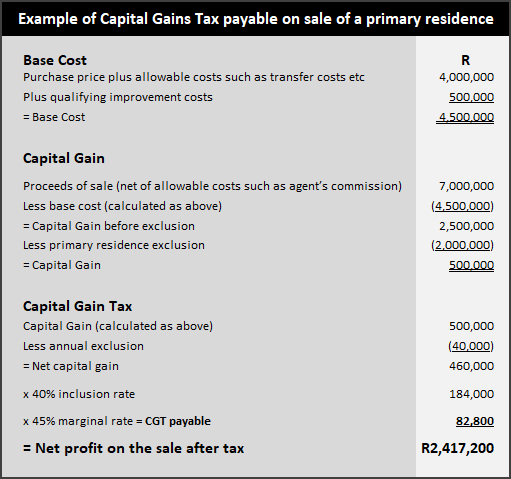
Buying and Selling Property: Who Pays What Costs?

By | Property
“Risk comes from not knowing what you’re doing” (Warren Buffett)
Don’t risk not knowing what you’re doing when you either sell or buy property. Avoid nasty shocks by budgeting properly for the costs you will incur – some of them can be substantial, and some are less obvious than others. The checklists below are of necessity not exhaustive and you would do well to take specific professional advice and to get cost quotes before you finalise your financial planning.
The costs you will pay as buyer
In the excitement of buying a house (particularly if it’s your first one!) it’s easy to underbudget and forget all the amounts of money you will have to pay over and above the purchase price. One suggestion is to budget for costs totaling up to about 10% of the purchase price, but here’s a list to help you with your own calculations (ignore any items that don’t apply to your purchase) –
  • Transfer duty (a government tax payable to the state via SARS unless the sale is subject to vat). You will pay on a sliding scale depending on the purchase price and beware – this can be a substantial cost!
  • The applicable transfer fees that the conveyancers will charge for their services in handling the transfer (you must pay these before transfer)
  • Deeds Office fees
  • Bond registration fees charged by the bank’s attorney
  • Bond/Home Loan initiation fee payable to the bank (the bank may also require you to take out a home loan protection life policy)
  • Occupational interest, if payable when you move in before the transfer takes place
  • Pro-rata rates, municipal charges and levies (some payable in advance)
  • If you are buying into a complex (sectional title or Homeowners Association) you may be liable for body corporate or HOA levy clearance fees in addition to pro-rata levies
  • Don’t forget other costs like moving costs, redecorating, telephone and internet connections, water and electricity deposits etc
  • Also remember to budget for your ongoing monthly costs of property ownership – rates, levies, municipal services, insurance (building and contents), security, building maintenance and the like.
The costs you will pay as seller
Again, ignore any of these items that don’t apply to your particular sale –
  • Estate agent’s commission (don’t forget the vat component)
  • Certificates of compliance – electrical, water, gas, electric fence, and the like. Provide also for the possibility of repairs and upgrades to ensure compliance with regulations
  • Bond cancellation fees (be careful here to give the bank enough notice to avoid having to pay an early termination penalty as well)
  • Rates and levies
  • If you live in a complex, there may be other fees payable to your body corporate or Homeowners Association.
Disclaimer: The information provided herein should not be used or relied on as professional advice. No liability can be accepted for any errors or omissions nor for any loss or damage arising from reliance upon any information herein. Always contact your professional adviser for specific and detailed advice.

© LawDotNews

Bodies Corporate: Forcing Access to Units, and Round Robin Resolutions

By | Property
Owning your own property comes with a raft of benefits, including a general right to privacy and control over who can access your property and who can’t. But of course there are exceptions. And apart from the obvious ones, a recent High Court judgment highlights one that is particular to sectional title schemes. It involved a unit owner whose “recalcitrant actions” prevented a body corporate from entering his unit to check for a water leak.
A recalcitrant unit owner blocks access to his unit for a leak test
  • A unit in a sectional title scheme had a damp problem and the neighbouring unit owner initially allowed the body corporate access to his unit to conduct a leak test. No leaks were found.
  • However three months later the damp problem was still unresolved, and this time the neighbour flat out refused access to his unit for a second leak detection test. Requests for access through the managing agents, loss adjusters, leak detection agents and the body corporate’s attorneys all fell on deaf ears.
  • The body corporate applied to the High Court for an urgent order compelling access within 48 hours.
  • Although the neighbour had initially taken the stance that there was no reason why a second inspection should be conducted, he had a last-minute change of mind (after taking legal advice) and accepted that the body corporate is entitled to conduct reasonable inspections from time to time in order to properly manage the common property. He made a settlement offer to this effect to the body corporate, which rejected the offer as it still wanted its costs.
  • Ultimately the Court rejected the neighbour’s attacks on the body corporate’s standing to bring the court application and held the neighbour liable to the body corporate for both the leak detection costs and the legal costs (only on the Ombud’s tariff – more on that below).
Were the body corporate’s round robin resolutions valid?
At issue was the validity of two body corporate resolutions. The full details of the various legal challenges mounted against the resolutions will be of great interest to industry professionals, but for most bodies corporate and unit owners perhaps the most important practical aspect is the attack on the first resolution because it was signed only by two of the five trustees on a round robin basis. The Court was unimpressed by the neighbour’s argument that the resolution was defective because it was not signed by a majority of trustees and did not record date, place, and time. “It is common practise” said the Court “what with the onslaught and the lagging effects of [Covid 19] that trustees, shareholders, governing bodies and directors meet virtually and sign documents via round robin.” “It is … not uncommon for [trustees] to manage the affairs of the body corporate as they deem fit and in the best interests of the owners. Ad hoc and informal meetings are often held in order to deal with incidents without having to call or convene a formal meeting of the trustees.”
Each case will be different
The particular facts in this case clearly played a significant role in the Court’s ultimate decision, and there is no substitute for legal advice specific to each unique set of circumstances. For example, one of this scheme’s Management Rules specifically caters for a trustee meeting by ‘any other method’ which, said the Court “in my view would encompass and encapsulate the extension of the method of signing resolutions. It would be absurd to consider or apply anything to the contrary.” Important also was the Court’s finding that “throughout the entire process all the trustees were aware of and informed of what was transpiring”.
Finally, a warning from the Court to always approach the Ombud first
The Court once again confirmed the principle that in a matter such as this the parties should in the first instance approach the CSOS (Community Schemes Ombud Service) rather than the High Court. Commenting that “I am of the view that this matter should never have been brought before this court as first instance” and “There are no exceptional circumstances pertaining to this matter, but rather issues that fall squarely within the ambit of the Ombud that can and would have been expeditiously dealt with at no cost as the employ of legal representatives is not permitted” the Court awarded legal costs to the body corporate only “on the tariff applicable in respect of proceedings under the ambit of the Ombud”. Reading between the lines, the body corporate was possibly fortunate that the High Court agreed to hear its application at all. It may well have been saved only by the Court’s expressed displeasure with the neighbour’s “recalcitrant actions” and by his conduct in opposing the application in the first place. Disclaimer: The information provided herein should not be used or relied on as professional advice. No liability can be accepted for any errors or omissions nor for any loss or damage arising from reliance upon any information herein. Always contact your professional adviser for specific and detailed advice.

© LawDotNews

Landlords: Zoning Law Contravention Could Invalidate Your Lease

By | Property
“…it is a general rule that a contract impliedly prohibited by statute is void and unenforceable…” (extract from judgment below)
Here’s yet another warning from our courts of the importance of complying with your local municipal zoning laws, whether you buy property to live in, as a capital investment, or to let out. One risk for a landlord is finding yourself with an invalid lease and no claim against your tenant. A recent High Court decision illustrates –
The unlawful coffee shop and the invalid lease
  • A landlord rented premises to a tenant for use as a coffee shop, home industry and restaurant. The tenant also resided on the premises, but no rental for the residential component was specified in the lease.
  • The business use was contrary to zoning provisions indicating that the property could only be used for dwelling purposes as it was zoned “Single Residential 2”.
  • The landlord, although aware of the zoning restrictions, told the tenant that she could operate her business.
  • When the landlord sued for arrear rental and payment of municipal charges the tenant’s defence was that the lease was invalid and unenforceable.
  • The High Court (hearing an appeal from the Magistrate’s Court) held the lease agreement to be illegal, void and unenforceable. The tenant, it said, could not be expected to establish from the municipality, before entering into the lease agreement, whether the premises could be used for her business. She had seen other restaurants in the same street and had no reason to question the landlord’s right to allow her to trade as she did.
  • As to the applicable law, the Court found that “although it is a general rule that a contract impliedly prohibited by statute is void and unenforceable, this rule is not inflexible or inexorable [inevitable].” The Court’s analysis of when this will apply (and when it won’t) will be of great interest to property professionals, but for most landlords the important thing is the fact that your lease will normally be invalid when it contravenes local legislation.
  • In that event, you will have no claim against your tenant because, as the Court here put it “this court shall not countenance unlawful conduct by allowing the [landlord] from benefiting from an illegal contract.”
  • Bottom line – the coffee shop tenant is not liable for rental, nor even for municipal charges relating to her occupation and use of the premises.
Zoning – what to do when buying or letting out property
The bottom line is that you need to understand all local zoning restrictions before buying property or letting it out to a tenant. If as a landlord you are aware of a possible issue in this regard, take professional advice on whether you may be able to word the lease in such a way as to protect you from losing all your claims against the tenant should worst come to worst. Disclaimer: The information provided herein should not be used or relied on as professional advice. No liability can be accepted for any errors or omissions nor for any loss or damage arising from reliance upon any information herein. Always contact your professional adviser for specific and detailed advice.

© LawDotNews